RV Appliance Maintenance
RV APPLIANCE MAINTENANCE IN Branch County, MI
Every propane appliance in your rig is built to run on about 11 inches of water column, and a correct leak test must hold that pressure for 3 full minutes. Meier RV Repair LLC services RV appliances in Coldwater and across Branch County, MI, covering furnaces, cooktops, ovens, microwaves, water pumps, and patio awnings. Booking runs through our contact page.
APPLIANCES FAIL IN PATTERNS, NOT AT RANDOM.
A furnace that locks out after three ignition attempts, burners that flicker yellow, a pump that cycles all night, an oven pilot that drops the moment you release the knob. These are not mysteries. They are familiar failures with familiar causes, and most of them trace back to pressure, airflow, dust, or a switch that has stopped proving what it is supposed to prove.
Service work catches those patterns while the fix is still a cleaning rather than a control board. That is the entire argument for maintaining appliances on a schedule instead of waiting for one to quit.
✓ Propane pressure checked and set to specification
✓ Timed leak test on the whole gas system
✓ Burners, igniters, and control boards inspected
✓ Findings explained before any part is ordered
RV APPLIANCE MAINTENANCE
EVERY BURNER IN YOUR RIG SHARES ONE REGULATOR.
The furnace, the cooktop, the oven, the water heater, and the refrigerator all draw from the same two tanks through one two-stage regulator. When that regulator drifts out of specification, the symptoms scatter across the rig: lazy yellow flames on one appliance, hard starting on another, a fridge that will not hold temperature. Owners chase each appliance separately. We test pressure first, because one adjustment sometimes answers three complaints.
MICHIGAN FURNACE SEASON STARTS BEFORE YOU EXPECT IT.
Cold nights arrive in Branch County well before anyone thinks of it as winter, and the furnace that sat untouched all summer is the appliance most likely to disappoint you. Mud daubers nest in the intake, dust settles on the sail switch, and the board locks out after a few failed attempts. Fall is the sensible time to have it tested, well before January lows near 18 degrees make it urgent.
PROPANE DOES NOT FORGIVE GUESSWORK.
There is a reason we start with a manometer rather than a parts catalog. Propane systems hold pressure, prove airflow, and shut themselves down in a specific order, and skipping a step to save time is how people get hurt. Over 10 years we have kept that discipline on every appliance job, whether the complaint is a furnace lockout or a stove burner that will not settle into a clean blue flame.
WHAT REGULAR APPLIANCE SERVICE PREVENTS
COLD NIGHTS WITH NO HEAT
A furnace tested in the fall is a furnace that lights in November. The alternative is discovering the sail switch is blocked at the exact moment the temperature drops and the campground office has closed.
SAFETY YOU CANNOT SEE
Gas leaks, blocked flues, and expired detectors give very little warning on their own. A timed pressure test and a detector check convert an invisible risk into something measured and documented.
SMALLER REPAIR BILLS
A dirty burner assembly costs cleaning. A control board damaged by repeated failed ignitions costs considerably more. Catching the first prevents the second, which is the whole economics of scheduled service.
APPLIANCES THAT WORK ON ARRIVAL
Nobody wants to spend the first evening of a trip troubleshooting an oven. Tested appliances mean setting up camp and cooking dinner rather than pulling access panels in the dark.
FEWER SEPARATE VISITS
The appliances share systems, so servicing them together makes sense. One appointment covers the propane side, the 12-volt side, and the water side rather than three trips for three complaints.
A CLEARER MAINTENANCE RECORD
Knowing what was serviced, what was replaced, and what was flagged makes the next decision easier. It also answers questions quickly when it comes time to sell the rig.
WHAT WE SERVICE
OUR RV APPLIANCE MAINTENANCE WORK
Appliance service covers the systems that make a rig livable rather than the ones that make it roll down the road. These are the units we test, clean, adjust, and repair on a maintenance visit.
FURNACE
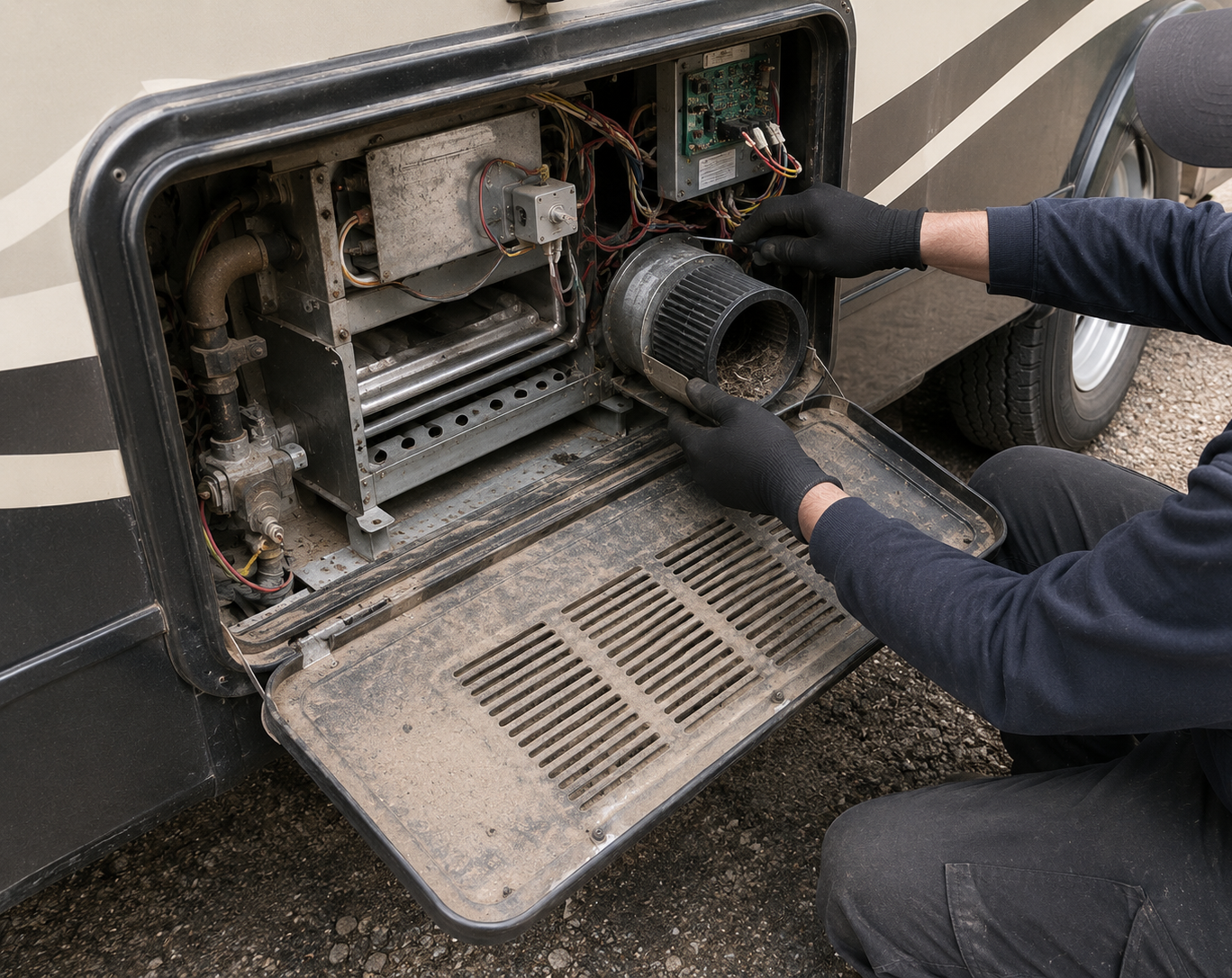
Furnace Service and Repair
We clean the burner assembly and blower, test the sail and limit switches that must prove airflow before gas flows, and check the board for lockout faults. Nesting insects and dust cause most no heat calls.
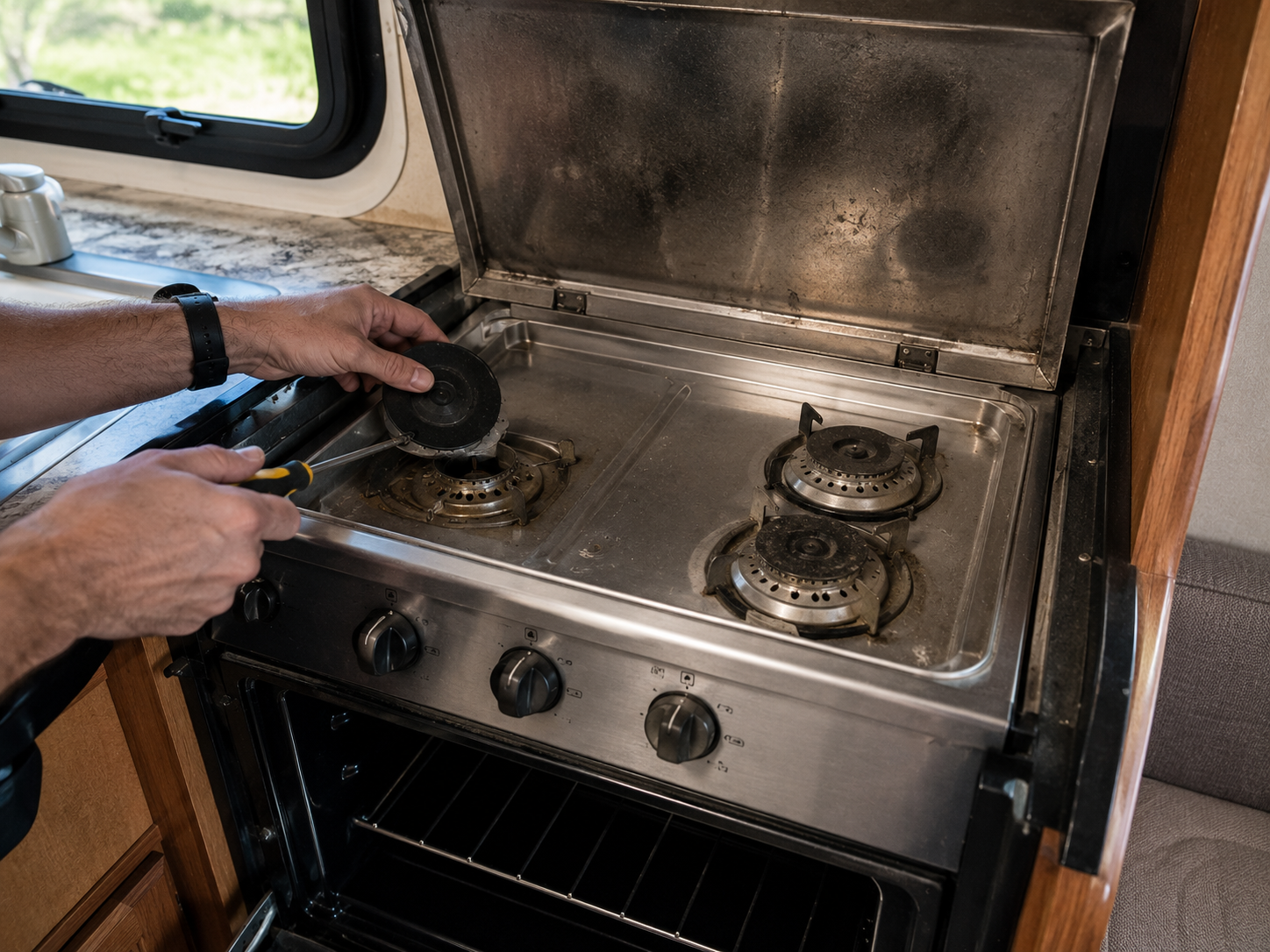
COOKING
Cooktop and Oven Service
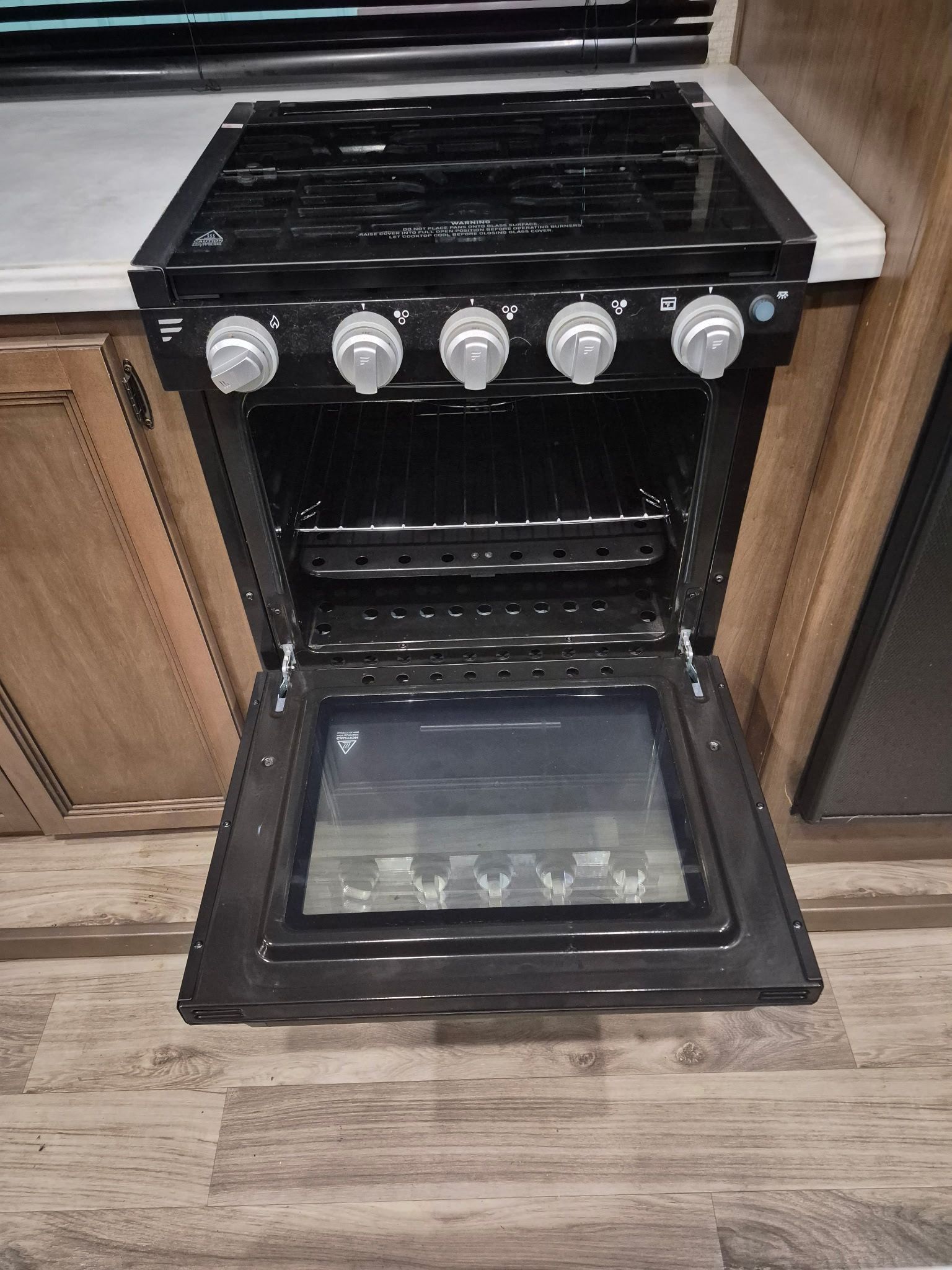
Yellow flames, burners that will not simmer, and pilots that drop out usually mean orifice blockages or a thermocouple that has weakened. We clean, adjust, and replace those components until the flame burns steady blue
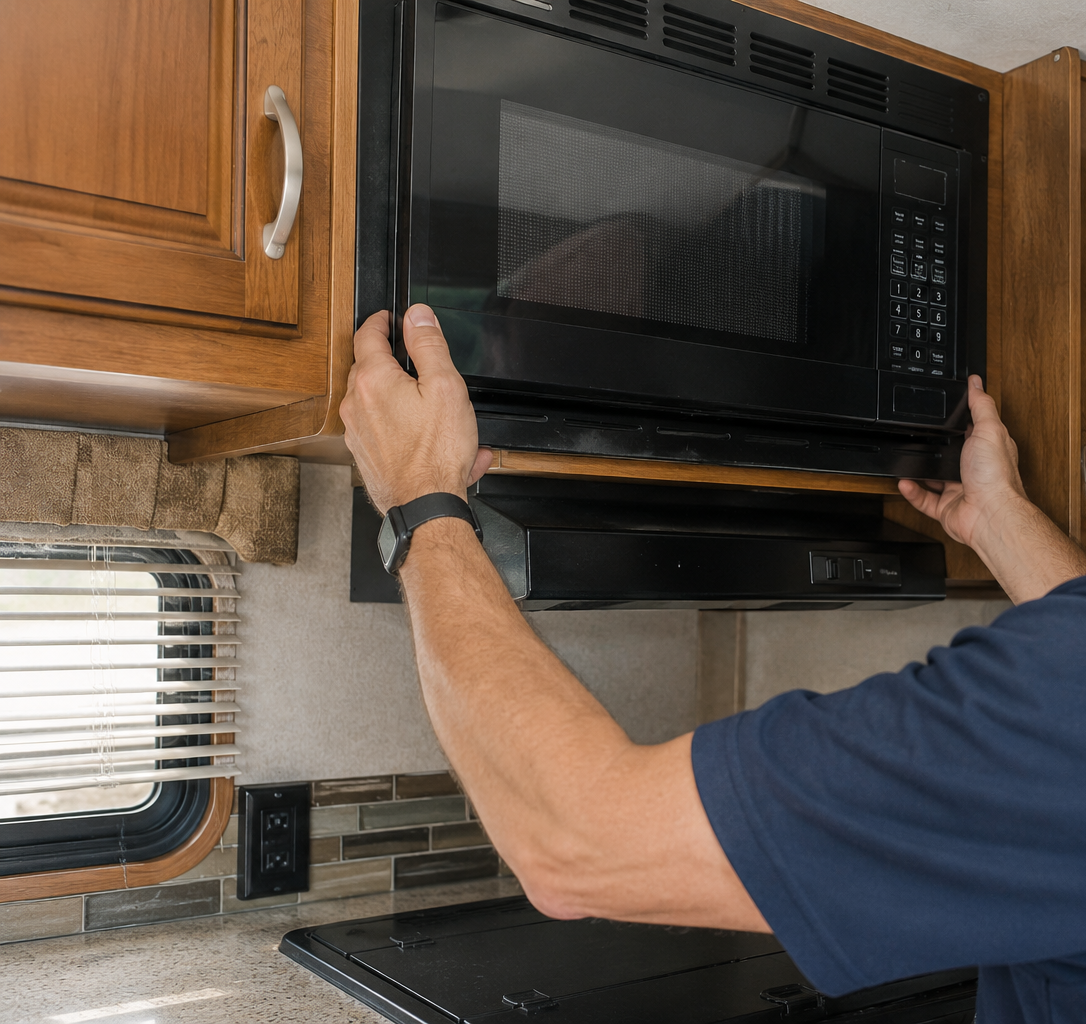
MICROWAVE
Microwave and Range Hood Repair
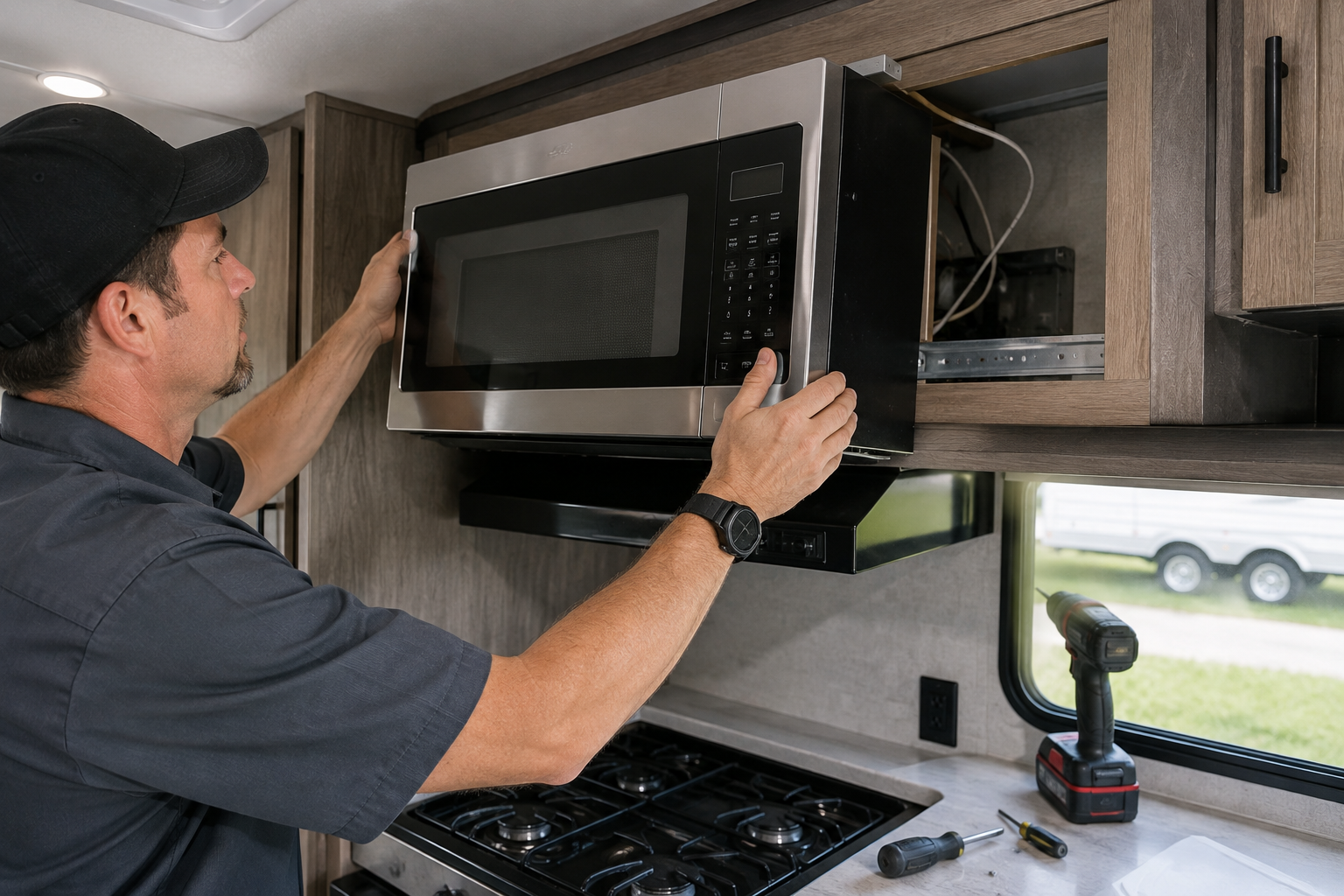
A microwave that runs but never heats has failed internally and is usually replaced rather than repaired. We confirm the diagnosis, check the supply circuit, and handle removal and fitting of the new unit.
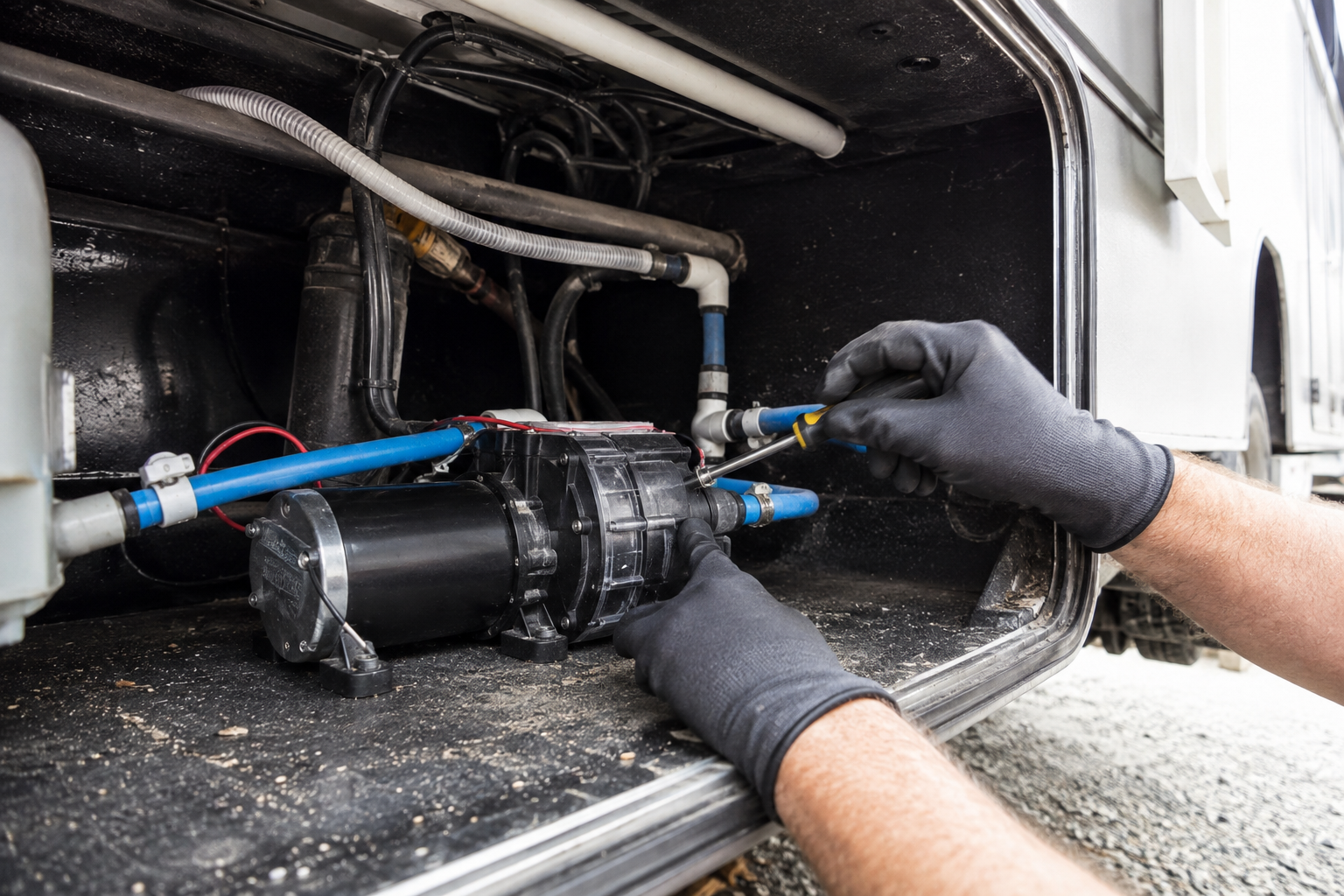
WATER PUMP
Water Pump Service and Replacement
Pumps that cycle with every faucet closed, run without delivering water, or pulse hard at the tap each point somewhere different. We test pressure, inspect strainers and fittings, and fit accumulators where they help.
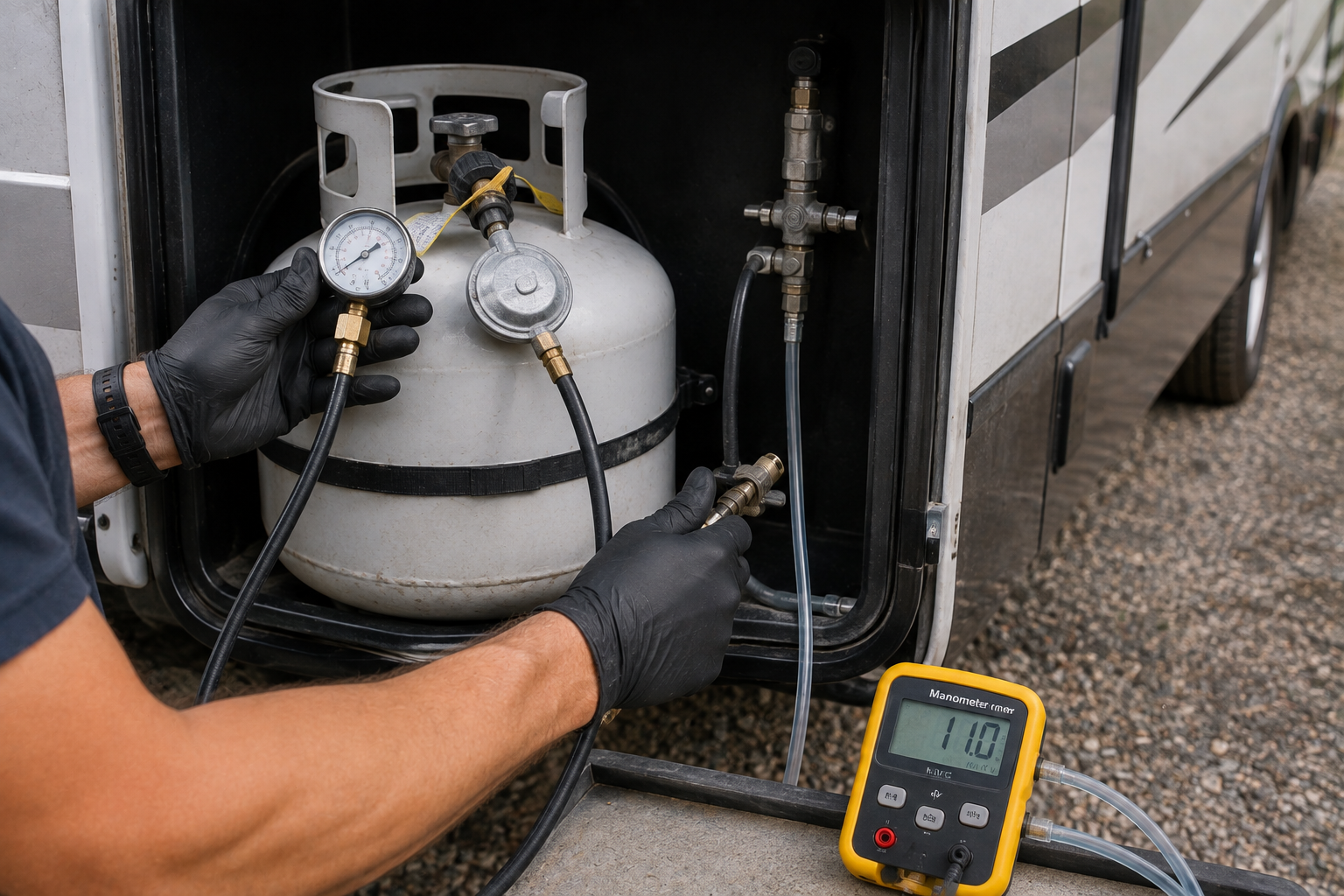
PROPANE
Propane System Testing and Regulator Service
Operating pressure gets measured at the appliance, and the system gets a timed pressure test rather than a quick sniff. Regulators that have drifted or aged out are replaced instead of adjusted indefinitely.
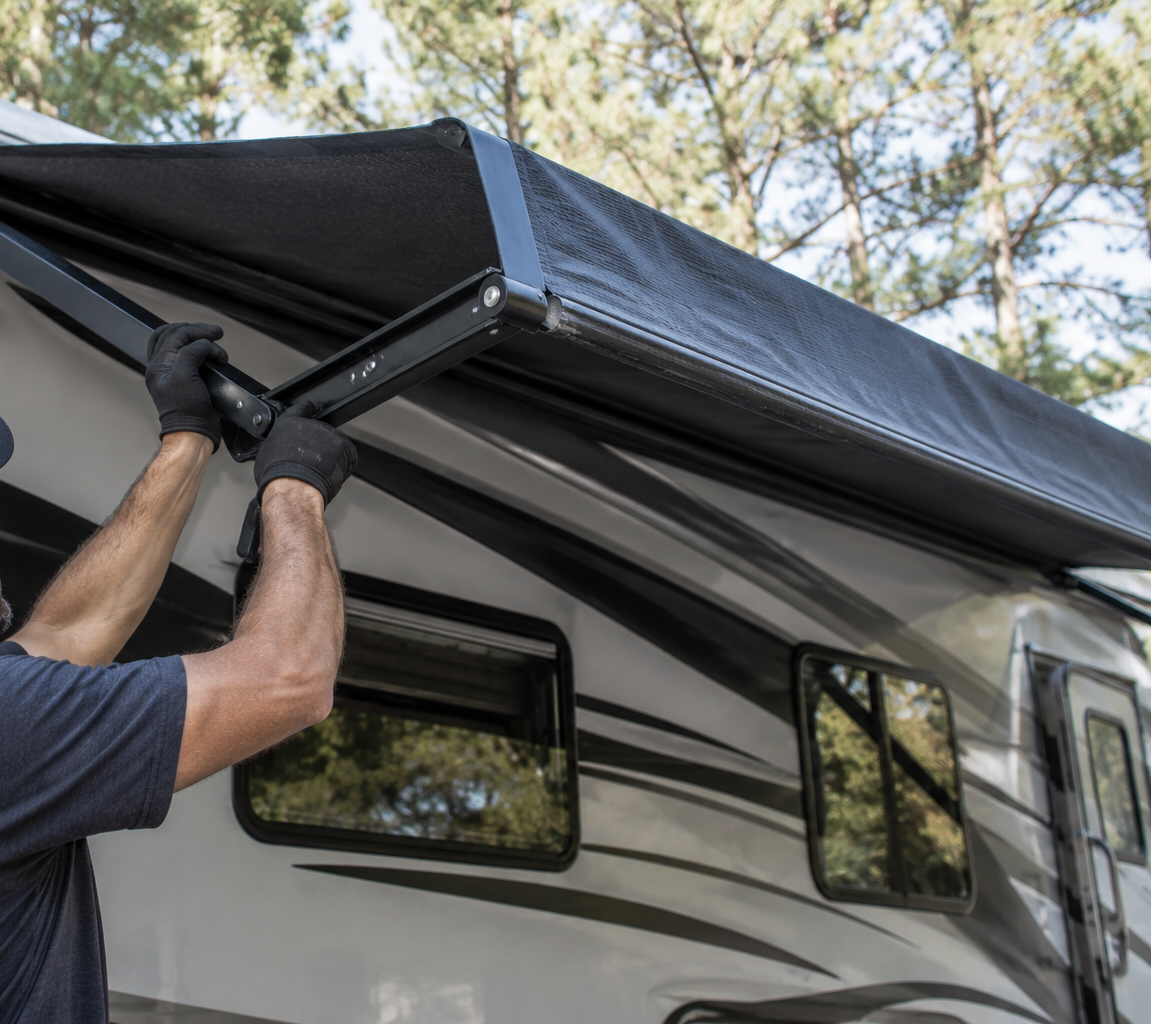
AWNING
Awning Inspection and Adjustment
Fabric that pools water, arms that bind, and motors that stall generally start with alignment and lubrication. We adjust the pitch so rain sheds properly and service the pivot points that seize from sitting.
Common Questions
FREQUENTLY ASKED QUESTIONS.
These come up constantly in the shop, and most of them have answers worth knowing before you start pulling access panels off in the middle of a campground.
Why does my RV furnace blow cold air?
The blower runs on 12-volt power, but gas only flows once the sail switch proves airflow and the limit switch confirms safe temperature. A blocked intake, a dusty switch, or low propane pressure stops ignition while the fan keeps turning.
What does the sail switch do on an RV furnace?
It is a safety switch that physically senses blower airflow and closes to allow gas flow. If dust, rust, or an insect nest keeps it from closing, the furnace runs its fan endlessly and never lights the burner.
Why does my furnace lock out after a few tries?
Most control boards attempt ignition three or four times, then lock out to prevent unburned propane from accumulating. Cycling the thermostat off for 15 seconds usually resets it, but repeated lockouts mean something further upstream needs proper diagnosis.
Why will my RV oven pilot not stay lit?
The thermocouple sitting in the pilot flame generates the tiny voltage that keeps the gas valve open. When it weakens or sits slightly out of the flame, the valve closes again the moment you release the control knob.
Why do my stove burners burn yellow?
Yellow, lazy flames indicate incomplete combustion, usually from a blocked orifice, spider webs inside the burner tube, or an air shutter out of adjustment. Low regulator pressure produces exactly the same symptom across every burner on the range at once.
How do I test my RV for a propane leak?
A proper test pressurizes the system and watches for any drop over 3 minutes, which catches leaks that soap bubbles at fittings will miss. Meier RV Repair LLC runs that test on every propane job in Coldwater, MI.
Why does my RV microwave run but not heat?
The turntable and light run on separate circuits from the magnetron that actually produces heat. When that component or its high voltage supply fails, replacing the whole unit is nearly always more sensible than trying to repair it.
How do I know if my propane regulator is bad?
Symptoms show up across several appliances at once: yellow flames, weak furnace output, a fridge that will not cool. Measuring pressure against the required 11 inches of water column settles it at Meier RV Repair LLC in Coldwater, MI.
HOW WE WORK
FROM PRESSURE TEST TO PAPERWORK, HERE IS HOW.
STEP 01
Listen to the symptoms
You tell us what each appliance is doing, when it started, and what has already been tried. Half of appliance diagnosis is knowing whether a fault is constant, intermittent, or tied to the weather outside.
STEP 02
Test the propane system first
Operating pressure gets measured and the whole system gets a timed leak test before any single appliance is opened up. Several complaints across different appliances often share one root cause back at the regulator.
STEP 03
Diagnose each unit in turn
Furnace, cooktop, oven, microwave, and water pump are each tested through their full operating sequence. We identify the failed component rather than replacing parts one after another until something finally starts working.
STEP 04
Report findings and quote
You get a plain account of what is faulty, what is worn but still serviceable, and what we recommend leaving alone for now. Parts are ordered only after you have approved the work.
STEP 05
Service, clean, and repair
Burners and blowers are cleaned, switches and boards are replaced where needed, and adjustments are made to specification. Cleaning is treated as part of the repair here, not as an upsell attached to it.
STEP 06
Verify and hand back
Every serviced appliance is run through a full cycle before the rig leaves the shop, and detector dates are checked while we are inside. You receive a written summary of everything that was done.
GET YOUR REPAIR ESTIMATE
HAVE THE APPLIANCES SORTED WHILE THE RIG IS PARKED.
List what is misbehaving through our contact page, along with the make and model of your rig. We will tell you what testing involves, what we can usually handle in one visit, and when we can fit you in.
WHAT YOUR SERVICE VISIT COVERS:
✓ Measured propane operating pressure
✓ A timed system leak test
✓ Full operating cycle on each appliance
✓ Burners, blowers, and strainers cleaned
✓ Detector dates checked while we are inside
✓ A written summary of the work